Tips for Riding a Scooty in Leh’s High Altitude Conditions
Most riding advice for Ladakh is written with the Royal Enfield rider in mind.
The Himalayan is probably the common bike you see on the Leh-Manali highway. The Classic 350 is also very popular. Some people actually ride to Leh on scooters. They do this because they want to or because they could not find a motorcycle when they got there. The good thing is that you can visit all the places like the monastery route, Magnetic Hill, the Sindhu Ghat, Nimmu and the Hall of Fame on a scooter like the Activa. You just need to make sure the scooter is in condition and you know how to handle it when you are riding at high altitudes like, in Leh.
Those conditions are really different from what a scooter rider experiences at sea level. You should understand these conditions before you ride a scooter, not when you’re in the middle of a climb at 4,000 metres and wondering why things feel off while using Scooty rent in leh. This is what makes a Leh scooty experience confident or stressful. Understanding the conditions of the Leh scooty ride before you start is important for a smooth scooty rent in leh experience. The conditions of the Leh scooty ride are very different from what you experience at sea level with a scooter.
What Altitude 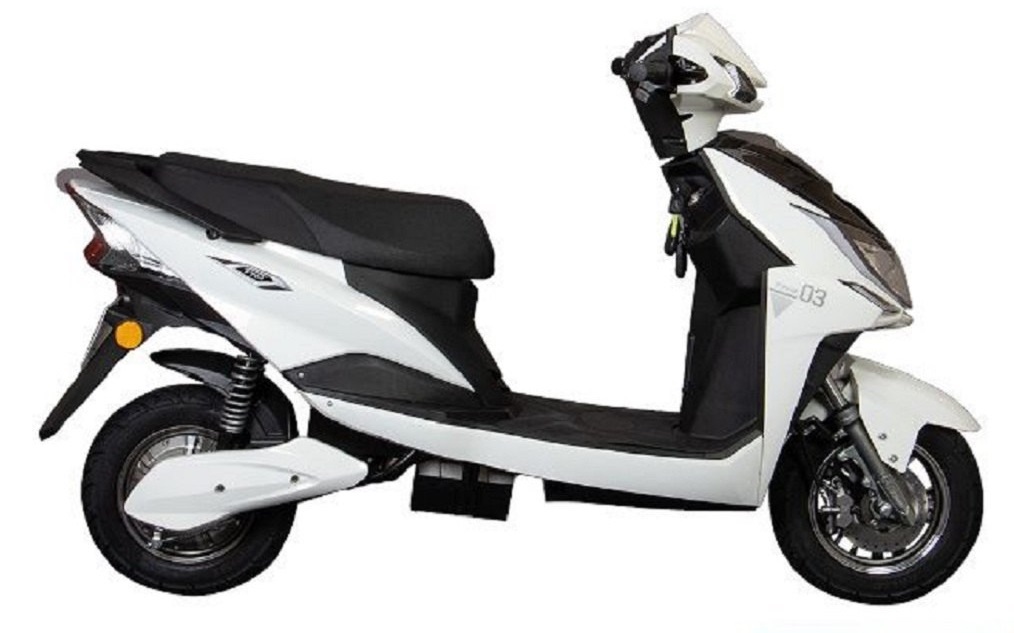 Does to Your Scooter?
This is where most riders who struggle on Leh scooters went wrong. They expected the bike to perform the way it does at home and were caught off guard when it didn’t.
At Leh, which’s 3,500 metres above sea level the air has only about 65 percent of the oxygen that we have at sea level. The Honda Activa scooter engine needs oxygen to burn fuel properly. At Leh the oxygen level is low so the Honda Activa engine does not burn fuel well as it does at sea level. This means the Honda Activa has power.
The Honda Activa can go up a hill in Bangalore easily but it will not be as responsive on the same hill at 3,500 metres. If you are riding the Honda Activa at 4,000 metres or higher it will be even harder to go up hills because the Honda Activa engine has a big problem with power. This can be a problem because you need to be able to go enough to be safe, on steep hills.
This is not a malfunction. It is physics. The bike is performing correctly for the conditions. Knowing this in advance means you set realistic expectations, ride with appropriate patience on climbs and don’t push the throttle hard trying to recover power that altitude has simply removed.
Scooters that use carburettors are more affected by altitude than fuel-injected scooters. This is because carburettors give a fixed amount of fuel and air which’s not good when the air is thin. When the air is thin the carburettor gives much fuel so the scooter does not run well.
If you are in Leh and you want to rent a scooter it is better to get a fuel-injected Activa 6G of a carburetted Activa 3G. The Activa 6G handles high altitude much better. This is because the fuel injection system can adjust the amount of fuel and air automatically. The scooter runs better even when the air is thin. Fuel-injected scooters, like the Activa 6G can get back some of the power that is lost at altitude.
TVS NTorq 125 riders will find the sport-tuned engine gives slightly better altitude performance than the Activa in the same conditions though the difference is modest. The fundamental reality is the same for any 125cc engine manage your expectations, ride within the bike’s adjusted capability and the monastery circuit is perfectly achievable.
Acclimatise Properly Before You Touch the Scooter Keys
The most important tip in this entire blog applies to the rider not the bike.
If you fly into Leh from any city at or near sea level your body needs time to adjust to the reduced oxygen before you ask it to manage a vehicle on mountain roads. Riding a scooter in any environment requires attention, reaction time and physical coordination. All three are subtly compromised by the initial effects of altitude before your body adapts.
Minimum 48 hours in Leh before riding anything beyond a short test in the parking area. First day stay at your accommodation or walk short distances in the Leh market area. Drink water consistently, eat light meals and sleep as much as your body asks for. Avoid alcohol completely for the first 48 hours it accelerates dehydration and worsens Acute Mountain Sickness symptoms in ways that are both uncomfortable and genuinely dangerous.
Common Acute Mountain Sickness symptoms are headache, nausea, mild dizziness, fatigue and disrupted sleep. Mild symptoms are normal. They go away with rest and drinking water in most cases. If symptoms get worse especially if you feel more breathless lose coordination or feel confused you need to go down to an altitude. Do not try to push through these symptoms.
On the day of getting used to the place walk around more and check out the Leh market and the nearby Shanti Stupa. See how your body is feeling. If you feel fine on both days then on day three pick up the scooter. Take a short ride around town. This will help you see how the bike handles at altitude before you go on any long rides, from Leh.
Choose the Right Scooty at the Rental Shop
Always choose a fuel-injected model over a carburetted one when both are available. The Activa 5G, 6G and the TVS NTorq 125 are fuel-injected and handle altitude meaningfully better than the older 3G and 4G carburetted models.
Check the tyres before accepting any scooter. At altitude on roads that include loose gravel sections, occasional water crossings and variable surface quality, tyre condition is a safety issue rather than just a comfort one. Press your thumb firmly into the tread on both tyres. Look at the sidewalls for cracking or bulging. Both tyres should be properly inflated. Underinflation at altitude where temperature changes affect tyre pressure noticeably between morning and midday reduces stability on loose surfaces significantly.
Check both brakes firmly in the parking area before accepting the bike. Front brake should offer clear firm resistance with no sponginess. Rear brake should engage decisively. Any softness should be flagged and addressed before you leave the shop.
Check the undercarriage for oil leaks by looking beneath the engine while it is idling. Active dripping is not normal and suggests a problem that will worsen on a longer ride.
Know Where the Scooty Can and Cannot Go
This is the clarity that prevents most of the scooty-specific problems in Leh.
I went to Leh. I used a 125cc scooter to get around. It was really comfortable to ride on these routes. I visited the monastery circuit which includes Thiksey and Hemis and Shey and Stok and Matho. I also went to Magnetic Hill and Gurudwara Pathar Sahib which’s on the Srinagar highway. The Sindhu Ghat area is really nice. There are some great viewpoints along the Indus River. I stopped at Nimmu village where the Indus and Zanskar rivers meet. The Hall of Fame Museum is also worth a visit. I even went to Alchi Monastery which’s about 70 kilometres from Leh and the road is mostly good. All of these places are at elevations, between 3,000 and 3,800 metres but my 125cc scooter handled the roads without any significant struggle. The scooter suspension and engine output were able to handle these roads.
You should not take a scooty to Khardung La at 5,359 metres. The road to Khardung La is long and it goes up for many kilometres. This is much for a small 125cc engine in a scooty. The engine will have a time and it will not be safe. Also, the road to Khardung La is very rough in some places. A scooty does not have ground clearance and its suspension is not good enough for these rough roads.
Chang La at 5,360 metres is also not an idea for a scooty. Chang La has the problems as Khardung La. You should not try to go to Nubra Valley via Khardung La with a scooty. Khardung La is just not suitable, for a scooty. That is why you should not go to Nubra Valley this way.
If you want these routes rent a Royal Enfield Himalayan. It costs more per day and it is the right vehicle for those specific demands. Choosing a scooty for the monastery circuit and a Himalayan for the high-pass days is a perfectly reasonable strategy that many Leh visitors use.
Manage the Scooter Differently at Altitude
The riding habits that work at sea level need adjustment at altitude, particularly on climbs and descents.
On climbs use the throttle smoothly and maintain a consistent pace rather than surging and backing off repeatedly. Repeated hard throttle applications demand combustion bursts that altitude-thinned air cannot efficiently support and strain the engine more than a steady pace does. If the gradient is steep and the scooter slows despite full throttle ease off, let the engine settle and continue at whatever speed it can maintain without forcing it. This is not failure. It is appropriate management of a 125cc engine at 4,000 metres.
On descents brake early and brake smoothly. The combination of gradient and reduced air braking effect at altitude means stopping distances are longer than you’re used to. Plan brake applications further in advance than you normally would, particularly approaching hairpin bends on descent.
Cold temperature and altitude together affect tyre grip more significantly than either condition alone. In the early morning at Leh before the sun is fully up, particularly on east-facing roads still in shade, the tyre grip is meaningfully reduced compared to midday conditions. Ride noticeably slower in the first 15 to 20 minutes of any early morning ride until the tyres have warmed up.
Avoid sudden braking or sharp steering inputs on sections with loose gravel which appears at the edges of most Leh roads and in patches mid-surface. A scooter’s lighter weight makes it more susceptible to losing traction on loose surfaces than a heavier motorcycle and front tyre washout on gravel at even moderate speeds is sudden and difficult to recover from.
Gear Up Properly
The safety gear conversation for Leh scooty riding is different from the same conversation in Bangalore or Delhi because the consequences of a fall at altitude are different.
Medical help is not nearby. The nearest hospital with meaningful emergency capacity is in Leh town. On routes even 30 kilometres from Leh a fall that would be minor at sea level is a more serious situation when extraction and treatment require significantly more time and logistics.
Full-face helmet minimum. Check that it fits properly, that the foam padding is firm and not compressed and that it does not rock when you shake your head with the strap fastened. If it doesn’t fit ask for another size.
Gloves are essential. Leh mornings are cold even in July and cold hands lose grip strength and fine motor control faster than warm hands. Wind-resistant riding gloves address both the protection-in-a-fall requirement and the cold hands problem simultaneously. About ₹400 to ₹600 for a pair that solves both issues.
A riding jacket with elbow and shoulder armour or a thick padded jacket at minimum. Wind chill on exposed skin while riding at even moderate speeds at altitude is significant. A windproof jacket with layers you can add or remove as the temperature changes through the day.
Sturdy ankle-covering shoes or boots. The occasions requiring you to put a foot down on an uneven surface are more frequent in Leh than on smooth city roads.
Carry These Things Every Time
A basic puncture repair kit and portable pump. Punctures on Leh roads are more common than on smooth city surfaces. A basic plug kit handles tubeless tyre punctures in five minutes without removing the wheel. Confirm whether your rental scooter has tubeless tyres which most modern Activas do.
Sufficient cash. UPI works in Leh market. It does not work at remote fuel points, at small dhabas on monastery routes or at the informal repair shops that handle problems away from town. At least ₹3,000 to ₹4,000 in mixed denominations on any riding day beyond the main market area.
A full water bottle minimum one litre. Dehydration at altitude happens faster and less obviously than at sea level. Drink before you feel thirsty not after.
Offline maps for any route beyond Leh town. Download Google Maps offline or install Maps.me before riding out. Mobile data is unreliable beyond Leh and unavailable in several areas on the monastery circuit.
The rental shop’s phone number saved in your phone and confirmed as the number monitored during riding hours. Know the operator’s breakdown procedure before you need it.
Time Your Rides Correctly
Leh’s weather has a daily pattern that matters for scooty riders specifically.
Mornings are clear and cold. The best riding window is between 8 AM and 1 PM when conditions are consistently stable, the light is excellent and the monastery routes are at their most accessible before the afternoon tour groups arrive.
Afternoon clouds build over the Ladakh mountains between 2 and 4 PM on many summer days. These occasionally produce brief rain showers or at higher elevations hail. Plan routes so you are heading back toward Leh by 1 to 2 PM and within town or a sheltered stop before the afternoon clouds develop.
Never ride after dark on any route beyond Leh town. The roads have no streetlights. The surface conditions invisible in darkness are the ones most likely to cause a fall. The temperature drops rapidly after sunset. Don’t create this situation.
The Bigger Picture
Riding a scooty in Leh is achievable, genuinely enjoyable and perfectly appropriate for the routes it suits. The monastery circuit on a well-maintained Activa in the early morning light, with the Himalayan peaks visible across the Indus Valley and almost no other vehicles on the road, is an extraordinary experience that doesn’t require a Royal Enfield to access.
What it does require is honest acknowledgement of what a 125cc scooter can do at altitude and what it cannot, appropriate acclimatisation before riding anything, the right gear for conditions that are genuinely colder and more remote than city riding and the preparation habits that convert potential problems into non-events.
Rent from Rent n Hop, give yourself two full acclimatisation days before the scooter keys go in the ignition, carry what you need and nothing you don’t and go find out what Thiksey Monastery looks like at 8 AM from a scooty parked on the approach road with the valley below and the mountains above. The answer is extraordinary.
0 Comments