Best Places to Visit Near Delhi Under 1000km
Living in Delhi gives you this cool geographical perk where an insane variety of escapes are basically right on your doorstep. Within a 500 km radius, the scenery shifts from the rugged Aravalli hills and the royal vibe of Rajasthan to the misty Himalayan foothills and the thick jungles of the Terai. The best part about these spots is the balance; a long weekend doesn’t have to be some high-stakes mission, it just needs a little direction. When you keep the travel time reasonable, you can fully switch off without feeling wiped out by the drive. You actually show up with your energy intact and head back to the city feeling like you actually had a break.
To make sure your long weekend actually feels like a breather instead of just a long commute, try following the “One-Site” Rule: pick just one big landmark to see each day and spend the rest of your time chilling at a local café, hanging in a park, or just napping. You’ve also got to play the seasons right within that 500 km radius, aim for the Rajasthan belt during the winter months (November to February) and hit the Uttarakhand or Himachal foothills during the shoulder seasons between March and June, Delhi motorcycle rental keeping it simple like this ensures you arrive with your energy intact and actually head back home feeling refreshed.
When you expand your circle to 500 km, the variety becomes enough to fuel years of exploration. Here is how to choose based on the mood of your long weekend:
The Wildlife Pause:
Jim Corbett National Park
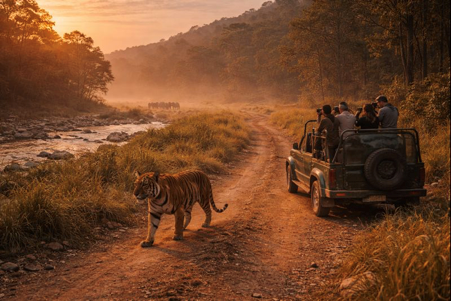
Located about 240 km from Delhi, Jim Corbett National Park is one of India’s oldest and most iconic wildlife sanctuaries. It is a destination that balances accessibility with absolute immersion. It is close enough for a relaxed drive but far enough into the foothills of the Himalayas to make the city feel like a distant memory.
A long weekend here isn’t just about “spotting a tiger” it is about the rhythm of the jungle, the sound of the Kosi River, and the stillness of the Sal forests.
Corbett is way more than just chasing tiger sightings; it’s about soaking in the different zones at your own pace. Instead of hitting a 5:00 AM safari every single day, spend a morning chilled out by the Kosi River. It’s the perfect spot to watch Himalayan birds and deer without the Jeep engine noise. For the best vibes, book an afternoon safari in the Dhela or Jhirna zones; the golden light between 3:00 PM and 5:30 PM is incredible for photos and way more relaxing. If the main gates feel too hectic, head to the Sitabani buffer area for a more private forest experience and a look at some hidden temple ruins. Just remember to book your permits at least a month early, and try to reach Ramnagar by noon on your first day so you can ease into the jungle life with a slow lunch.
Ranthambore National Park
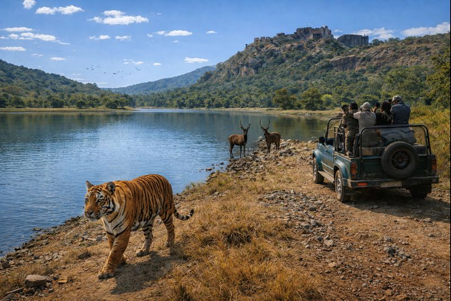
Located roughly 390 km from Delhi (and easily accessible via the Jaipur-Dausa expressway or a quick train ride), Ranthambore National Park is perhaps India’s most photogenic wildlife sanctuary. It is a place where the wild is framed by history; ancient fort walls, crumbling arches, and abandoned hunting lodges are often the backdrop for a tiger sighting.
A long weekend in Ranthambore is most rewarding when treated as a slow immersion. With three or four days, you can move beyond the “one-safari” gamble and truly experience the landscape, the architecture, and the rhythm of the Rajasthani wilderness.
The best part of a long weekend in Ranthambore is having the time to actually be patient; sightings aren’t guaranteed, but the extra days let you soak in the different landscapes without feeling rushed. Definitely spend an afternoon at the Ranthambore Fort. It’s a UNESCO site you can actually walk through, and the views from the ramparts are insane (you might even spot a crocodile or leopard in the lakes below). If you can, snag a safari in Zones 3 or 4 to see the massive ancient Banyan tree and watch deer graze by the lake at sunset, which feels totally timeless. When you’re not in a Jeep, head over to Dastkar Ranthambore to see local women doing incredible block printing and pottery. It’s a great, quiet way to support the community. Pro tip: take the Jan Shatabdi train from Delhi to Sawai Madhopur instead of driving; it’s only about 4–5 hours, so you’ll show up fresh and ready for an evening drive.
Sariska Tiger Reserve
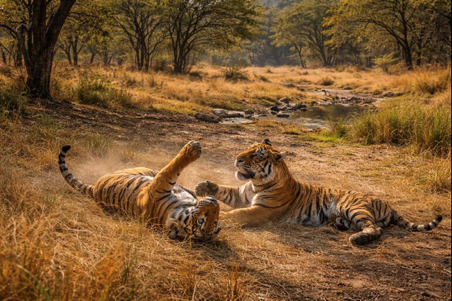
Just 200 km from Delhi, Sariska Tiger Reserve is a landscape of rugged hills, deep valleys, and dry deciduous forests. While Ranthambore is famous for its density of tigers, Sariska is cherished for its quietude. It is a place where you don’t just “see” the jungle; you hear it.
Long weekends here work best when you divide your time between the core tiger reserve and the surprisingly rich historical ruins tucked away in the Aravalli folds.
Sariska is way less commercial than other parks, so it’s perfect if you want a raw forest vibe without the touristy “chase.” While everyone hunts for tigers in Zones 1 and 3, keep an eye out for the rare Four-Horned Antelope or leopards hiding on the rocky cliffs. The scenery here is actually the star. A cool highlight is the drive to Pandupol, an ancient temple tucked deep in the woods, or the Jeep trek up to Kankwari Fort, where the silence on the ramparts is just incredible. Since there’s almost zero light pollution, it’s also a huge spot for stargazing. You can actually see the rings of Saturn through a telescope at some of the local camps. If you want to avoid the main crowds, stay near the Tehla Gate instead of the main entrance, and don’t miss a slow boat ride at nearby Siliserh Lake to spot crocodiles and birds.
The Spiritual Stillness
Ajmer
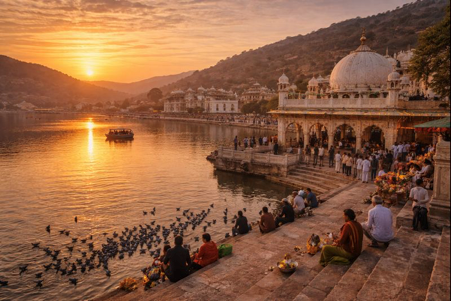
Located about 390 km from Delhi, Ajmer is a city that resonates with spiritual energy and historical depth. While many rush through as a day trip, a long weekend allows you to experience Ajmer Sharif Dargah with the respect and patience it deserves. It is a place where faith transcends organised religion, bringing people from all walks of life together under a single, peaceful canopy.
The vibe in Ajmer is all about the soulful sounds of the Azaan and live Qawwali, so you really need a couple of days to let it sink in. To catch the Ajmer Sharif Dargah at its most magical, head there at 5:00 AM for a quiet, intimate moment before the crowds, or stick around for the evening Qawwali in the marble courtyard. It’s a total meditative reset. Just a short walk away is Adhai Din Ka Jhonpra, an ancient mosque with incredible stone carvings that most people breeze past, meaning it’s usually nice and quiet. When you need a breather, the marble pavilions at Ana Sagar Lake are the perfect spot to lounge, especially if you take a boat out to the centre at sunset to watch the city lights start to twinkle. Since Pushkar is just a 30-minute drive over the hill, you can easily balance the spiritual depth of Ajmer with a lazy breakfast by the Pushkar lake. Pro tip: take the Vande Bharat from Delhi to get there in a breezy 6 hours, and remember to bring a scarf to cover your head at the Dargah.
Amritsar
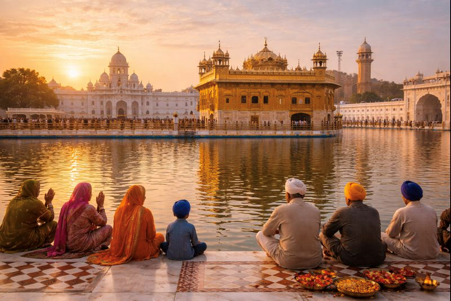
Amritsar is a city that doesn’t just show you its history; it invites you to live it. While many visit for a quick glimpse of the gold, a long weekend allows you to sink into the city’s true soul, the spirit of Seva (selfless service). In Amritsar, the transition from the noise of the bazaars to the silence of the Golden Temple is where you find a rare kind of mental grounding.
The Golden Temple is the heart of Amritsar, but the real magic is in the quiet moments behind the scenes, like the Palki Sahib ceremony at 4:00 AM when the air is thick with the scent of roses and the marble feels cool underfoot. To truly get the vibe, don’t just visit and spend an hour doing Seva in the world’s largest community kitchen peeling garlic or washing dishes; it’s a massive ego-check and surprisingly meditative. Step off the main tourist drag and get lost in the 400-year-old Old City alleys to find ancient havelis and traditional copper smiths who’ve been there for generations. When it comes to food, it’s all about the “slow” process, like the overnight-cooked Dal Makhani at Kesar Da Dhaba or a legendary seven-layered kulcha dripping with butter. If you’re heading to the Wagah Border, try a weekday for a bit more breathing room, but otherwise, just grab a thick lassi from Ahuja’s and soak in the city’s incredible warmth.
Khatu Shyam Ji
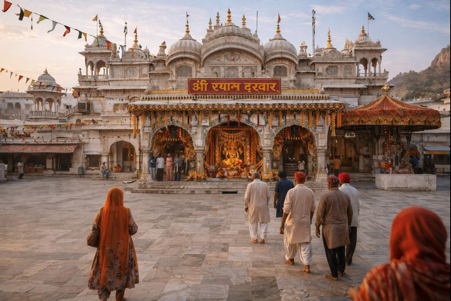
Khatu Shyam Ji is a destination that feels uniquely grounded. While it attracts millions of devotees, the village of Khatu has managed to retain its simple, unhurried character. It is a place where Lord Krishna is worshipped as Shyam Baba, the manifestation of Barbarika’s sacrifice.
A long weekend here offers more than just darshan; it provides a chance to witness the “Shyam-Balaji” spiritual circuit at a pace that allows for reflection rather than a rush.
Khatu is all about syncing up with the temple’s daily rhythm, and having a few days there lets you catch those late-night aartis when the village finally gets quiet. The real magic happens during the Mangala Aarti at dawn. The early morning mist combined with the chanting is way more peaceful than the midday madness. Definitely take a minute to sit by the Shyam Kund, where the deity’s head was supposedly found, or head over to a local Gaushala to spend a quiet afternoon serving the cows; it’s a super grounding Rajasthani tradition. If you’re feeling adventurous, you can complete a “triple blessing” by driving out to the bearded Hanuman at Salasar Balaji or checking out the 10th-century ruins at Harshnath Temple for some killer hilltop views. Just a heads-up for 2026: skip the massive Phalgun Mela if you’re looking for a “slow” vibe, take the train to Ringas Junction to save time, and try staying in a local Dharamshala for a simple, authentic experience.
Mountain Calling
Kasauli
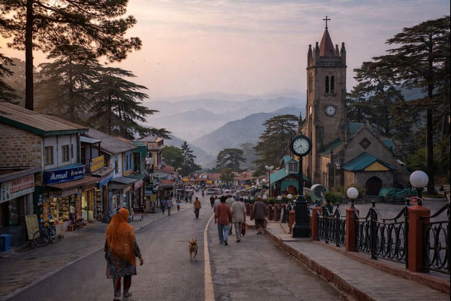
Kasauli is the antithesis of the crowded, commercial hill station. It is a town that hasn’t outgrown its colonial era skin, defined by pine scented air, cobbled paths, and a military town discipline that keeps the noise levels low.
In Kasauli, the “sights” are secondary to the rhythm. It is a place where a long weekend is best spent doing very little walking until you find a view, and sitting until the sun goes down.
Kasauli doesn’t really need an itinerary; it’s more about those quiet rituals that help you finally pull the plug on city life. You’ve gotta hit the Gilbert Trail at sunrise. It’s a short, easy walk, but the way the light hits the pines while the birds are waking up is the ultimate mental reset. For a hit of nostalgia, wander past the grey stone walls of Christ Church and up the Upper Mall Road, which is way quieter and leafier then the usual touristy mall roads you see in other hill stations. If you’re up for a bit of a climb, Manki Point is the highest spot in town; since it’s a high security area and you have to leave your phone behind, it actually forces you to just look at the view of the Sutlej River without trying to capture it for the ‘gram. For food, grab a legendary Bun Samosa at Narinder Sweets or spend a whole afternoon with a hot chocolate at Cafe Mitti watching the valley. Pro tip: if you aren’t in a rush, take the Toy Train to Dharampur for a nostalgic, slow motion entry into the hills before a quick taxi ride up to town.
Jibhi
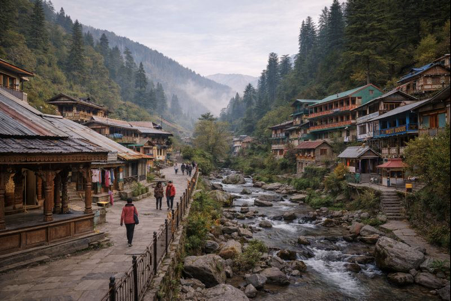
Hidden deep in Himachal Pradesh, Jibhi is one of the most authentic and peaceful hill destinations . Unlike the commercial centers of Manali or Shimla, Jibhi remains a quiet hamlet of traditional wooden architecture, freshwater streams, and whispering pine forests.
A long weekend here is an invitation to do “nothing” in a setting that makes doing nothing feel like an achievement.
Jibhi is the kind of place that’s beautiful specifically because it’s missing all the typical “tourist” noise: no malls, no loud markets, just the Tirthan River and some great local hospitality. You can start your day with a chill walk to the Jibhi Waterfall, where the wooden bridges and mist make it a perfect spot to just sit with a sketchbook before anyone else shows up. For a bit of history, hike up through the apple orchards to see Chehni Kothi, a massive 1,500-year-old tower built without any mortar that’ll make you feel like you’ve stepped back centuries. If you’re feeling the mountain air, head to Jalori Pass and take the easy 5 km trail to Serolsar Lake; it’s a sacred spot so clear that legend says birds pick out every fallen leaf to keep it pristine. The best way to get there is an overnight bus from Delhi to Aut, then a quick taxi through the valley. Just a heads-up: mobile signals are spotty and ATMs are rare, so bring some cash, embrace the “offline” life, and definitely try to stay in a treehouse or a wooden cottage for the full experience.
Guwahati
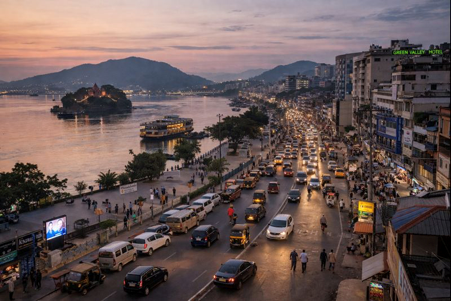
While often seen as a gateway to the Northeast, Guwahati is a destination that rewards those who slow down. Positioned along the mighty Brahmaputra, the city offers a “riverine” lifestyle, a mix of ancient hill-top temples, serene island retreats, and a food culture that is light, fresh, and deeply traditional.
A long weekend here is about trading the desert dust of the North for the humid, green landscapes of the East.
Guwahati is all about the river, and the best way to see it without the rush is to just follow the water. Start at Kamakhya Temple on Nilachal Hill, but aim for around 3:00 PM; you’ll skip the heavy morning crowds and get to see the Brahmaputra glowing at sunset, which is way more peaceful. To really escape the city buzz, hop on a quick ferry to Umananda Island. It’s the world’s smallest inhabited river island and home to some very cool golden langurs. After checking out the temple there, just hang out on the stone steps for an hour and watch the river move by. For a bit of history and a great coffee, head to the Mahabahu Heritage Center, a converted British-era bungalow with killer views and manicured gardens. When you get hungry, dive into an authentic Assamese Thali at Heritage Khorikaa make sure to try the Masor Tenga (sour fish curry) and if you’ve got an evening free, a sunset cruise on the Alfresco Grand is the perfect way to wrap things up with some local folk music.
But Guwahati is 500km away from Delhi by plane so best way is to plan an itinerary and as soon as you reach Guwahati rent a bike or better pre book your rental bike from rent n hop.
The royal pause
Udaipur
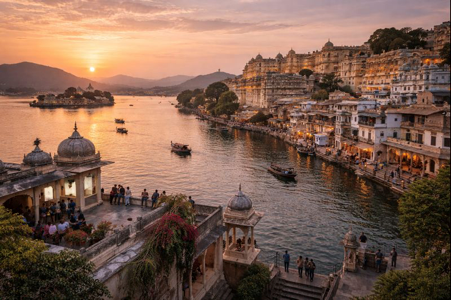
Udaipur is just a 60-minute flight away, making it a favorite for those who want to swap the city’s concrete for white marble and shimmering lakes. Often called the “Venice of the East,” Udaipur is best experienced not as a sightseeing marathon, but as a series of slbikeow, elegant moments.
In Udaipur, the water dictates the pace. The city doesn’t just have lakes; it lives around them.
In Udaipur, “doing nothing” is basically a royal sport, and having a long weekend lets you skip the frantic pace and actually soak in the elegance. Get to the City Palace right at 9:30 AM to catch the peacock mosaics in peace before the crowds show up, then head to Lake Pichola for a sunset boat ride. Instead of just doing a quick loop, hop off at Jag Mandir island and hang out for a coffee just to watch the city turn to gold from the water. For a serious hidden gem, check out the Ahar Cenotaphs. It’s a field of over 250 white marble domes that’s strangely quiet and perfect for a slow walk. When you get hungry, grab some Lal Maans on a rooftop overlooking the illuminated palaces, or hit the lanes near Jagdish Temple for some local Poha and Jalebi. Since the old streets are super narrow, just jump in an e-rickshaw to get around, and definitely try staying in a restored Haveli to keep that heritage vibe going even when you’re just napping.
Bikaner
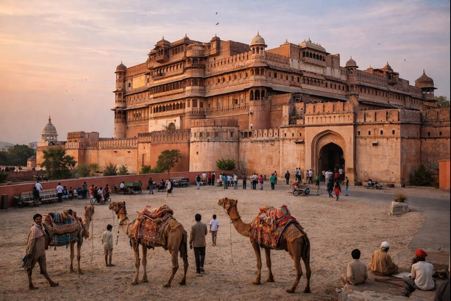
Bikaner is often the “hidden” third point of the Rajasthan desert triangle. While Jaipur and Jodhpur draw massive crowds, Bikaner remains a sanctuary for those who want true Rajasthani royalty without the tourist chaos. Built from the local red sandstone, the city has a rugged, unpolished charm that feels more authentic and unhurried.
A long weekend here is an invitation to explore a city where history still lives in the narrow, camel cart filled lanes of the Old City and the silent ramparts of one of India’s most unconquered forts.
Bikaner has this incredible way of feeling like a living part of the desert rather than a stuffy museum. Start your weekend at Junagarh Fort. It’s a “ground fort” that was never actually captured, and because it isn’t a “tourist factory,” you can take your time admiring the gold-leaf work and the “Cloud Palace” without being shoved along by a crowd. To really feel the old-world vibe, take a horse carriage (tonga) ride through the Old City to see the Rampuria Havelis; the red sandstone carvings are so intricate they look like they were carved from a single block. For a low-energy afternoon, head to the Camel Research Centre to watch hundreds of camels return from the desert at sunset and definitely don’t leave without trying the Camel Milk Kulfi. Since this is the snack capital of India, you’ve gotta hit the shops near Kote Gate for fresh Bhujia and grab a legendary breakfast at Chhotu Motu Joshi. If you want a royal finish, a dinner at the eccentric Narendra Bhawan is the perfect way to soak in the city’s elegance.


0 Comments